The Yoni Jesner Foundation was set up in memory of Yoni Jesner, 19, of Glasgow, Scotland, who was killed in a suicide bombing on a bus in Tel Aviv, Israel, on 19th September 2002.
Yoni's drive and determination led him to achieve more in his 19 years than many people do in a lifetime. His infectious enthusiasm and love of people left a lasting impression on all who came into contact with him. He was an inspirational youth leader and a true role model for many youngsters.
Through its projects the Foundation perpetuates Yoni's memory and continues the vital work to which Yoni devoted his short life.
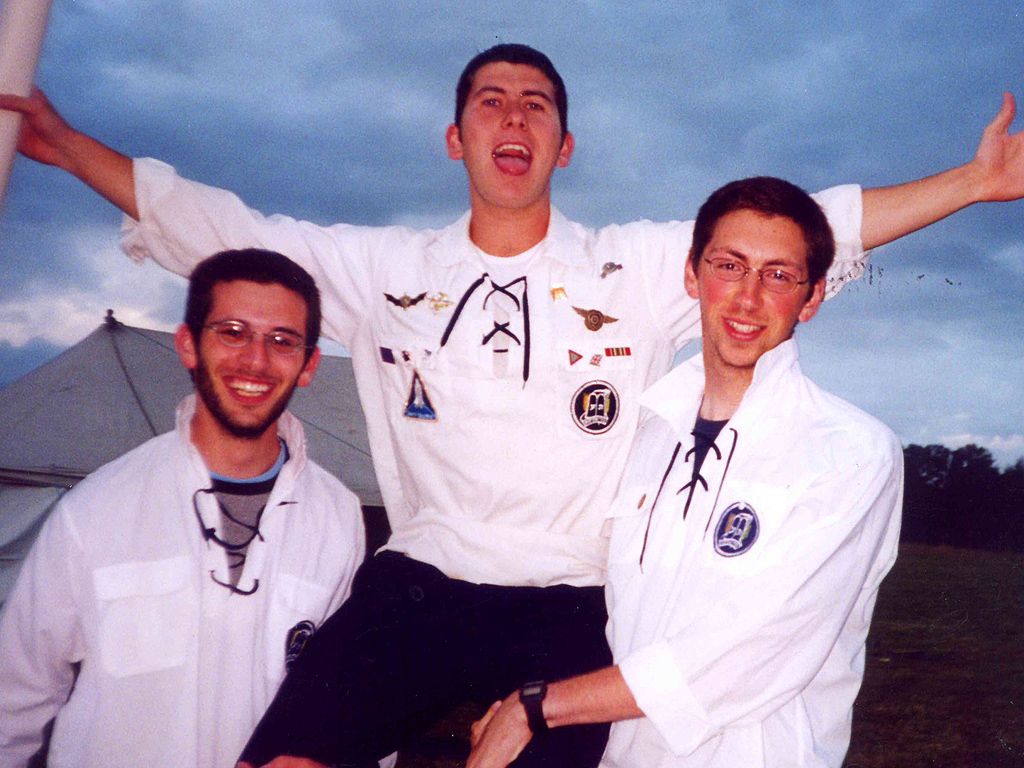 by Rabbi Gideon Black, Yoni's cousin
One of the many inspiring things we can learn from Yoni is what he did on his final morning before Yoni and I embarked on the journey that would ultimately cost him his life.
We davened Shacharit (prayed the morning service) at a shiva house. It was a Thursday morning and when we came to kriat haTorah (reading from the Torah) there was nobody able to lein (chant) the appropriate section. Yoni stepped forward and leined V’zot Habracha the last parsha in the Torah on his last day. He was fluent in much of the Torah as he leined almost weekly in Glasgow.
Then, before going to the bus station, Yoni went into a second-hand bookshop. Three weeks earlier he had bought a book there, and after signing a cheque with the shopkeeper’s pen, he accidentally slipped the pen into his pocket. He had kept it with him all this time, just in case he would get a chance to return the pen that was not even worth fifty pence. I remember his relief after giving it back to the shopkeeper, such was his desire to return the pen to its proper owner.
Both these acts are deeply rooted in Torah values. In Kiddushin (30a) it says: “The Rabbis taught in a Braita: The Torah says ‘VeShinantem’ which means ‘And you shall teach them’. This conveys that the words of Torah shall be sharply honed in your mouth, to the extent that if someone asks you something you will not stammer before answering, but rather you will be able to answer immediately.”
Clearly the words of Torah were sharply honed in Yoni’s mouth. He was able to lein fluently without preparation. Furthermore, while in Yeshiva, whenever I asked him to explain something that I didn’t understand in the Talmud, he would confidently clarify the issue without hesitation, but always in his very humble manner.
At the beginning of Parashat Ki Tetzei we are told of the Mitzva (commandment) of returning lost items to their original owner. It did not matter to Yoni that the shopkeeper would not have noticed that his pen was missing, nor did he feel that the hassle of going back to that shop was too much to justify keeping the pen. If something is not yours, you cannot use it without permission and you have an obligation to return it.
These are my last memories of my dearest friend and cousin Yoni on our final day together.
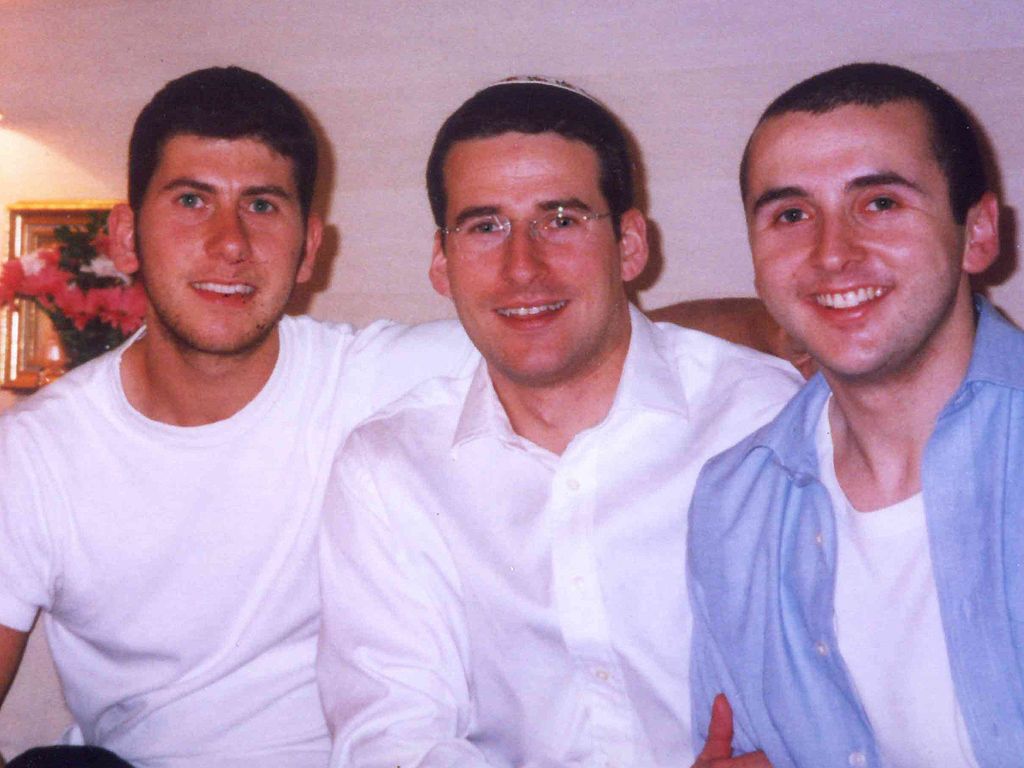 By Ari Jesner, Yoni's eldest brother.
Despite being the youngest of the four Jesner children, Yoni was very much his own person, exceptionally determined and single-minded. Although in many respects he followed in his older siblings footsteps, he carved out his own unique path. He was closest in age (with a ten year gap) to his sister Yael, who adored the fun, warmth and patience of his sweet personality.
Yoni really was something special. He had the unique gift of befriending everyone: whether 90-year-olds in synagogue, six-year-olds at his local youth group, or the laundry man where Yoni studied in Israel. Yoni counted all these amongst his friends.
He had the most bizarre and ridiculous sense of humour. He could make anyone laugh no matter what the situation. Yoni was also extremely caring. He was the one who would always ensure that no Shabbat afternoon went by without all four of us going to visit our grandfather. He cared passionately about those things that were important to him and worked tirelessly to ensure he was doing the maximum to help as many people and good causes as possible. He had a very strong sense of what was right and fair and would never shy away from arguing his corner. Every decision Yoni made was deliberated over and thought through very carefully.
At first when Yoni went to study at Yeshiva in Israel on his gap year, many people thought he would drop out because he didn’t seem serious and was such a joker. To their amazement he turned out to be one of most serious and dedicated students. He helped a lot of the boys with their learning and gave up some of his time to learn with kids from the local neighbourhood. Most importantly though Yoni introduced the Yeshiva to ‘Yoni humour’. If you speak to the boys he was in Yeshiva with they have plenty of stories to tell!
Yoni was a gifted student, he achieved ‘A’ grades all the way through school and was elected a school prefect. He was so busy with community work that our mum always complained that he was never at home. Where exactly he found the time to study is a mystery to everyone. He was the force behind the rejuvenation and expansion of Glasgow Bnei Akiva, his local youth group. He organised and ran cross-communal events as well as inter-youth movement activities. Yoni was responsible for sending the Jewish Youth delegation to the Scottish Parliament. He was a Jewish Studies teacher and was in charge of running the children and youth services at his local synagogue where he also assisted the Rabbi. Yoni found the time to tutor other youngsters to help them with their schoolwork and studied himself at the Glasgow Yeshiva. Yoni was also the youngest volunteer at the Glasgow Jewish burial society. He read from the Torah in synagogue almost every week and all this he accomplished in his final year of school when he was also to sit his A-levels. In true Yoni style he obtained 5 ‘A’s and secured a place to study medicine at University College London. His grades were in the top 4 students in Scotland that year. It is fair to say, without exaggeration, that Yoni in his 19 years achieved more than many people do in a lifetime.
Yoni also wrote and led Jewish assemblies at the school he attended. He saw these as a vital opportunity to educate. Yoni was concerned that when he left Glasgow there would be no-one to continue with the assemblies and so before he left to study at Yeshiva in Israel, Yoni turned down an inter-railing holiday around Europe with his friends and instead spent four weeks at the community centre in Glasgow writing assemblies for the entire year he would be away so Glasgow's young people would not have to go without.
Yoni achieved more in his 19 years than many achieve in 90.
Yoni's Writings
Yoni's writings (aphorisms) are legally copyrighted - if a third party wishes to use or reproduce the aphorisms, the potential user must contact the Foundation for permission.
 Amongst Yoni’s belongings that were found on the bus, were two pages of A4 with his handwriting. These had been started in 1999 and the latest date on them was 13 July 2001.
They are of Yoni’s thoughts on life; very brief, but incredibly insightful in one so young. He wasn’t writing them to show people, he wasn’t writing them to impress. He was writing them for himself - to live by and to think about.
Click here to download the aphorisms.